The Model Is No Longer the Product
The newest systems from OpenAI, Anthropic, Google, Meta, Moonshot, and Groq point to the same shift: AI engineering now lives in the control plane.
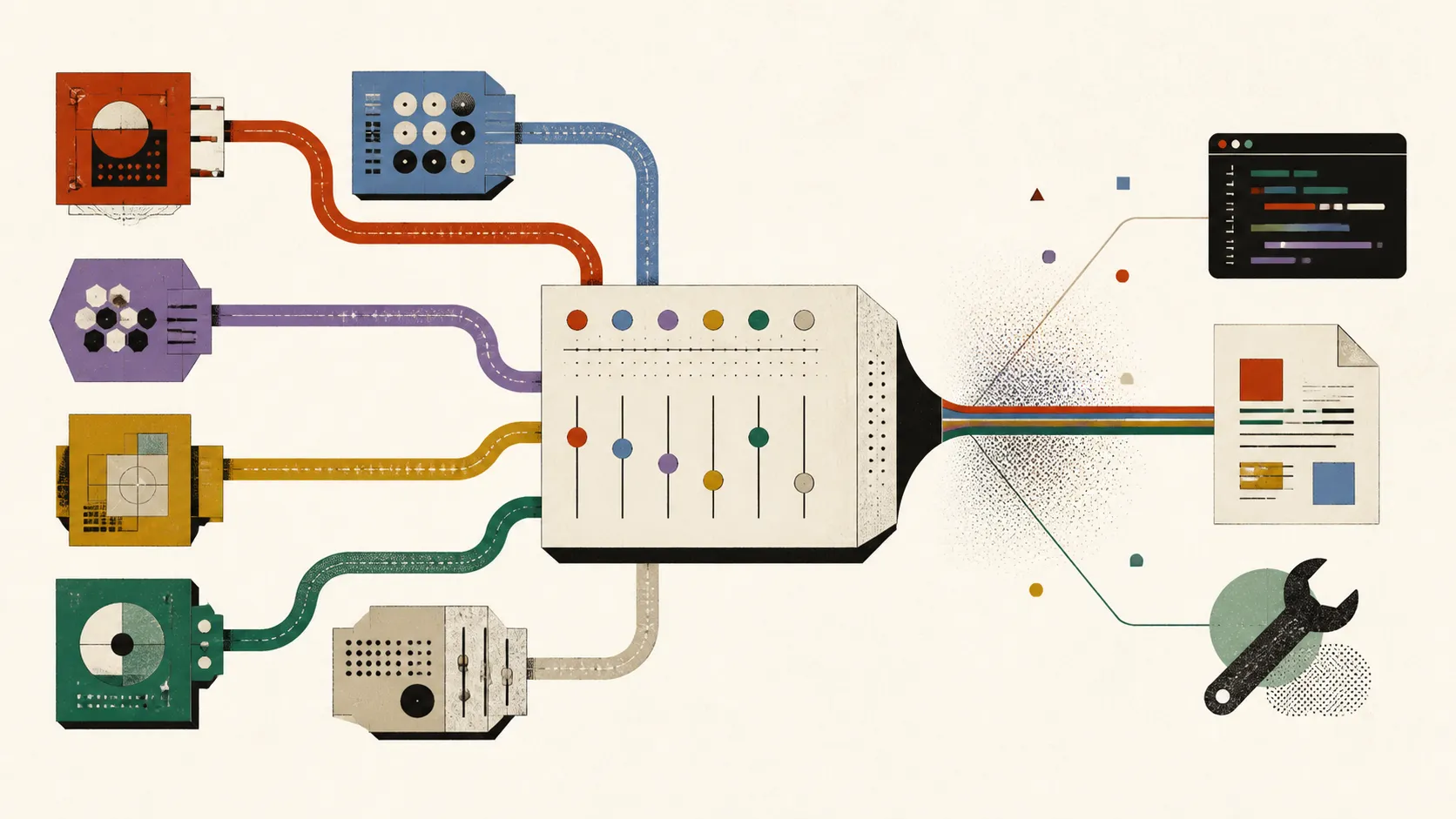
Yesterday, OpenAI published the first performance results from its own inference chip. Two days earlier, Groq said it would be among the first clouds to deploy a new accelerator for long-context agents. Google is selling its newest agent model at workhorse prices. Meta trained one model to act as both supervisor and worker. Moonshot is exposing the message contract needed to keep a million-token agent on track. Anthropic is pulling the agent runtime apart so every layer can be replaced.
These look like six different announcements. They are one story.
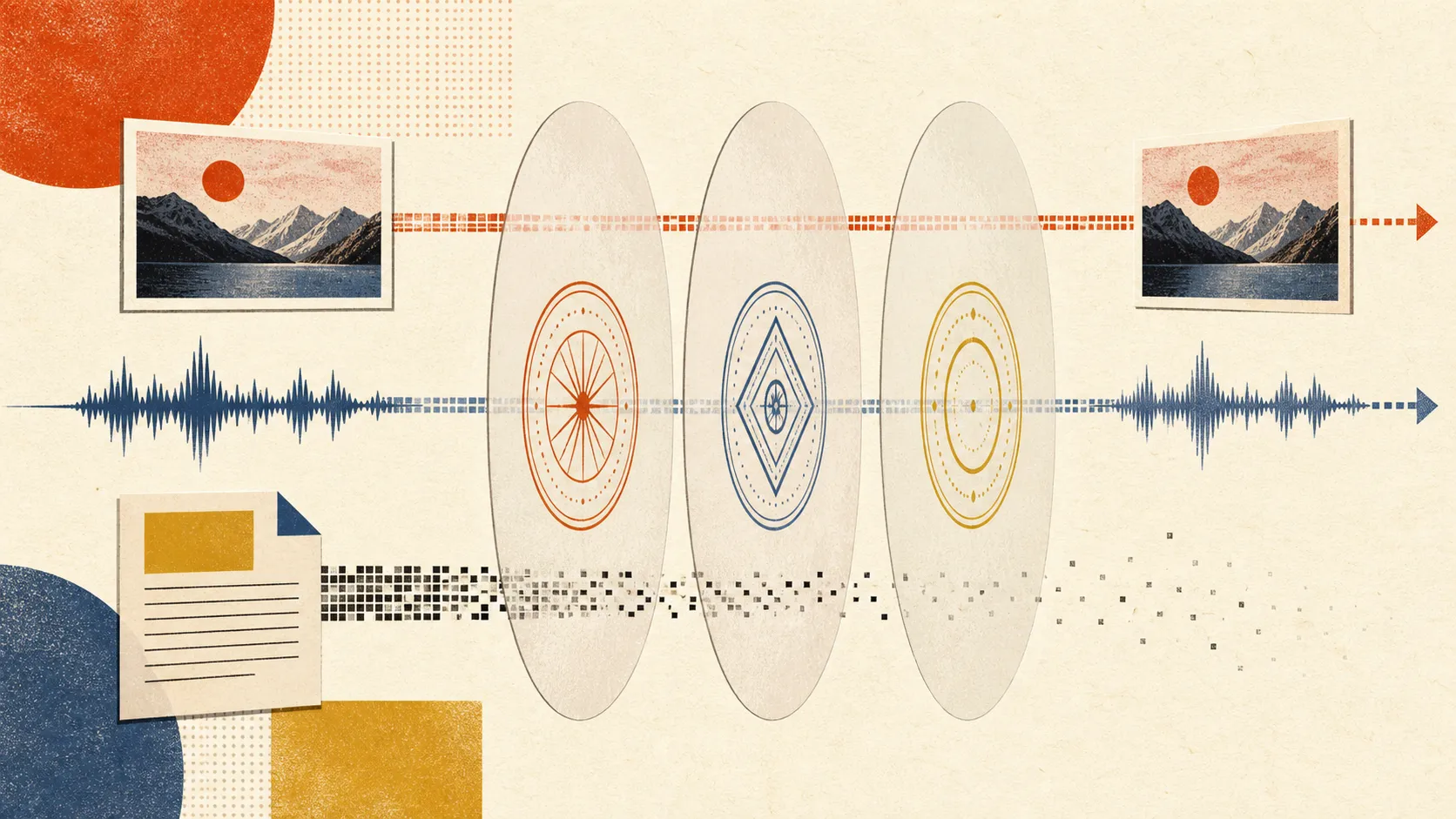
The frontier-model race has become a systems race. A capable model still matters, but it is no longer enough. The useful unit is completed work per dollar, and that result comes from the whole loop: routing, context, tools, subagents, verification, and the hardware serving every token.
For builders, this changes the job. Stop asking which model wins. Start asking which system finishes the work.
The old abstraction is breaking
Most AI applications still begin with a simple diagram:
prompt → model → answerThe systems shipping now look more like this:
objective
  → planner and router
  → model portfolio
  → tools and sandboxes
  → context and memory policy
  → parallel workers
  → verifier
  → completed artifact
That extra machinery is not scaffolding around the intelligence. It is part of the intelligence.
OpenAI supplied the cleanest proof. In its builder’s guide to GPT-5.6, the company reports that retained reasoning and native context compaction raised the same model’s ARC-AGI-3 score from 13.3 percent to 38.3 percent while using roughly six times fewer output tokens. No new checkpoint. Better state management.
The guide also moves deterministic work outside the context window. Instead of asking the model to read every raw tool result, Programmatic Tool Calling lets it write code that filters, joins, and aggregates results first. Tokens are reserved for judgment, not plumbing. Native multi-agent orchestration then lets a primary agent fan independent work out in parallel.
This is a more useful definition of capability: not what a model knows in isolation, but what the complete runtime lets it finish.
Six labs are moving down the stack
OpenAI is closing the optimization loop
OpenAI now describes one integrated system spanning data centers, chips, models, its developer platform, products, and devices. Its August 25 full-stack update included the first measured results from Jalapeño, its custom inference chip. OpenAI says the chip delivered higher peak throughput per kilowatt and lower token latency than the commercial systems in its InferenceX comparison.
The more interesting loop runs in both directions. OpenAI reports that GPT-5.6 helped rewrite production GPU kernels and explore serving strategies, contributing to a 20 percent reduction in end-to-end serving cost. The model also ran hundreds of speculative-decoding experiments that improved token-generation efficiency by more than 15 percent. The agent is served by the stack, then helps improve the stack that serves the next agent.
Anthropic is making the harness replaceable
Anthropic’s July release of Claude Opus 5 emphasizes performance at a given cost per task, plus verification, root-cause analysis, and sustained multi-step work. Those are system behaviors, not chatbot flourishes.
Its more durable contribution may be architectural. Anthropic’s Managed Agents design separates three things: an append-only session log, a harness that calls the model and routes tools, and a sandbox where code and file operations run. Any layer can fail, scale, or be replaced without dragging the others with it.
That separation matters because every harness contains assumptions about what the current model cannot do. Those assumptions expire quickly. A good agent runtime should make them cheap to remove.
Google is turning the cheap tier into the agent tier
Gemini 3.7 Flash arrived on August 13, three weeks after 3.6 Flash. Google positions it as a coding and agent workhorse, with an introductory price of $0.75 per million input tokens and $3.75 per million output tokens through the end of 2026.
Google reports large gains over 3.6 Flash on software engineering and workflow evaluations, including 65.3 percent versus 49.0 percent on DeepSWE v1.1 and 30.4 percent versus 17.0 percent on Zapier AutomationBench. Vendor benchmarks deserve caution, but the product decision is clear: high-volume agent loops should not need the most expensive model at every step.
Google’s demos make the same point. Flash supervises subagents building an interactive site, participates in a three-agent robotics loop, and turns static documents into interactive data stories. The fast model is becoming the foreman, not merely the extractor.
Meta is training the supervisor and worker together
Meta’s Muse Spark 1.1 is designed for tool use, computer use, coding, and orchestration. In supervisor mode it gathers context, plans, and delegates parallel work. In subagent mode it stays inside an assigned job and escalates when needed.
Spark supports a one-million-token context window. Meta still trains it to retrieve earlier work and compact the window while preserving critical steps. That is the lesson every long-context release keeps teaching: a bigger room does not remove the need to keep it organized.
Meta is also developing four generations of its MTIA silicon over two years, with the next generations optimized first for generative-AI inference. Orchestration only becomes a mass-market feature when repeated model calls become cheap enough to disappear into the product.
Moonshot makes the hidden contract visible
Moonshot’s open-weight Kimi K3 is a 2.8-trillion-parameter mixture-of-experts model with 104 billion active parameters and a one-million-token context window. It activates 16 of 896 experts per token and supports different reasoning-effort levels.
The revealing detail sits in the integration instructions. During multi-turn tool use, the application must return the complete prior assistant message, including reasoning content and tool calls. Lose that state and the agent loses continuity. The harness is responsible for preserving the model’s working process, not only the visible conversation.
Kimi’s official agent documentation describes swarms of up to 300 subagents. That does not mean every task needs 300 workers. It means open-weight deployment now includes the same orchestration questions as managed frontier APIs: who delegates, what context crosses a boundary, how results are merged, and what happens when a worker fails.
Groq is treating latency as agent infrastructure
Groq’s August 24 hardware announcement targets exactly this workload. Groq says it will deploy NVIDIA Groq 3 LPX with Vera Rubin NVL72 through GroqCloud, citing NVIDIA-published results of 3,400 output tokens per second for Gemma 4 31B at 100K context and four times higher interactivity for latency-sensitive agent workloads than the nearest alternative.
Those are partner claims, not neutral measurements. The direction still matters. A slow call is annoying in chat. Twenty slow calls inside a planner-worker-reviewer loop make the product unusable. Time to first token is no longer enough; builders need time to completed task under real concurrency.
What the control plane has to do
A production control plane does not need to be elaborate. It needs to make seven decisions explicit.
- Define the outcome before choosing the model. Track task success, retries, wall-clock time, and total inference cost. Token price alone hides failed runs.
- Route by role. Use cheap models for extraction and repeated substeps. Spend frontier reasoning on planning, ambiguity, adjudication, and recovery.
- Keep deterministic work in code. Sort, filter, join, validate, and calculate outside the model. Send back the smallest high-signal result.
- Manage context as state. Specify what gets retained, retrieved, compacted, cached, and handed to another worker. A long window is capacity, not policy.
- Parallelize only independent work. Subagents can cut elapsed time while increasing spend and synthesis risk. Fan out when the branches do not block one another.
- Separate worker from verifier near the edge. Use tests for verifiable work and a skeptical reviewer for subjective output. Do not pay for a second opinion when the first model is already reliably inside its competence.
- Make every layer replaceable. Session, router, model, tool adapter, sandbox, memory, and evaluator should have seams. The market will invalidate today’s model-specific workaround faster than the rest of your product changes.
Then run the eval under production conditions. Include tool latency, concurrency, real context length, safety refusals, cache hits, and regional inference locality. A benchmark run on an empty queue is not a product test.
The step to take this week
Pick one workflow already in production. Write down its current model calls as a graph. Mark which steps require judgment, which are deterministic, which can run in parallel, and which need independent verification.
Move one deterministic step into code. Route one low-risk step to a cheaper model. Add one end-to-end measure: cost per successful completion.
Do not begin with a 300-agent swarm. Begin by discovering which part of your system is pretending to need intelligence.
The companies building frontier AI are all arriving at the same conclusion: performance is now a property of the system, not the checkpoint. The next durable advantage will not come from choosing the winner of this week’s model table. It will come from building the control plane that can use the next winner by Friday.
Source note: All benchmark and infrastructure figures above come from company-authored materials and are attributed accordingly. Cross-vendor scores are not directly comparable because harnesses, reasoning settings, tool access, and evaluation versions differ.
Tim CheungEditor · platform and adoption
Tim edits Supasifu and has spent his career deploying AI inside enterprises. He writes about the platform engineering underneath it — the pipelines, evals, and guardrails that decide whether a system survives contact with production — and about onboarding: how you get a whole organisation using AI without breaking how it already works.